Shortcut
Shortcut
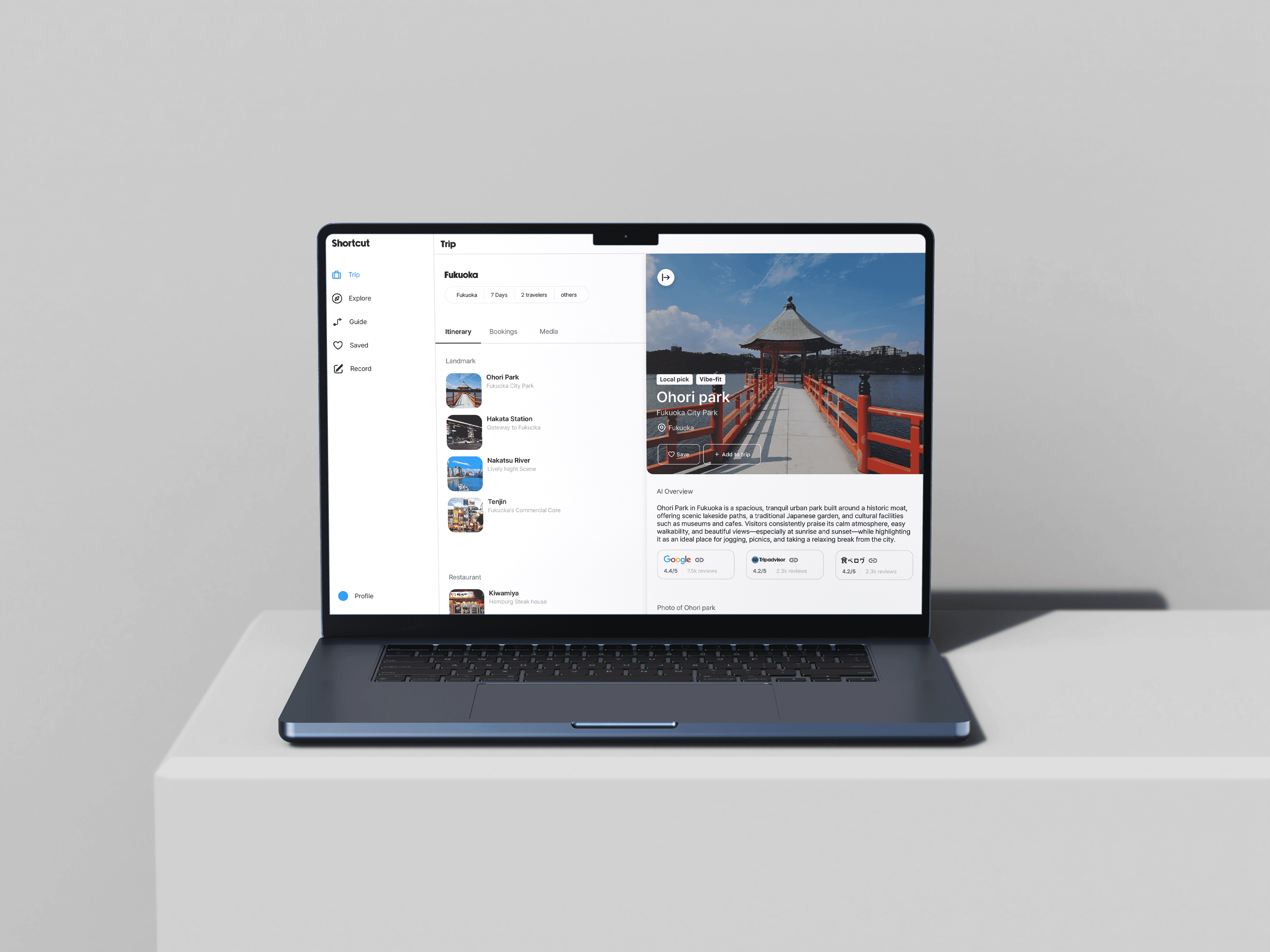
As travel planning becomes increasingly fragmented across platforms, we designed Shortcut to reorganize the planning process itself. Rather than automating decisions, Shortcut positions AI as a collaborative companion that helps users plan with clarity and flexibility.
As travel planning becomes increasingly fragmented across platforms, we designed Shortcut to reorganize the planning process itself. Rather than automating decisions, Shortcut positions AI as a collaborative companion that helps users plan with clarity and flexibility.
Year
2025
Company
Personal Project
Category
Website
Role
End-to-End Design
Background
Background
The Limits of AI Travel App
The Limits of AI Travel App
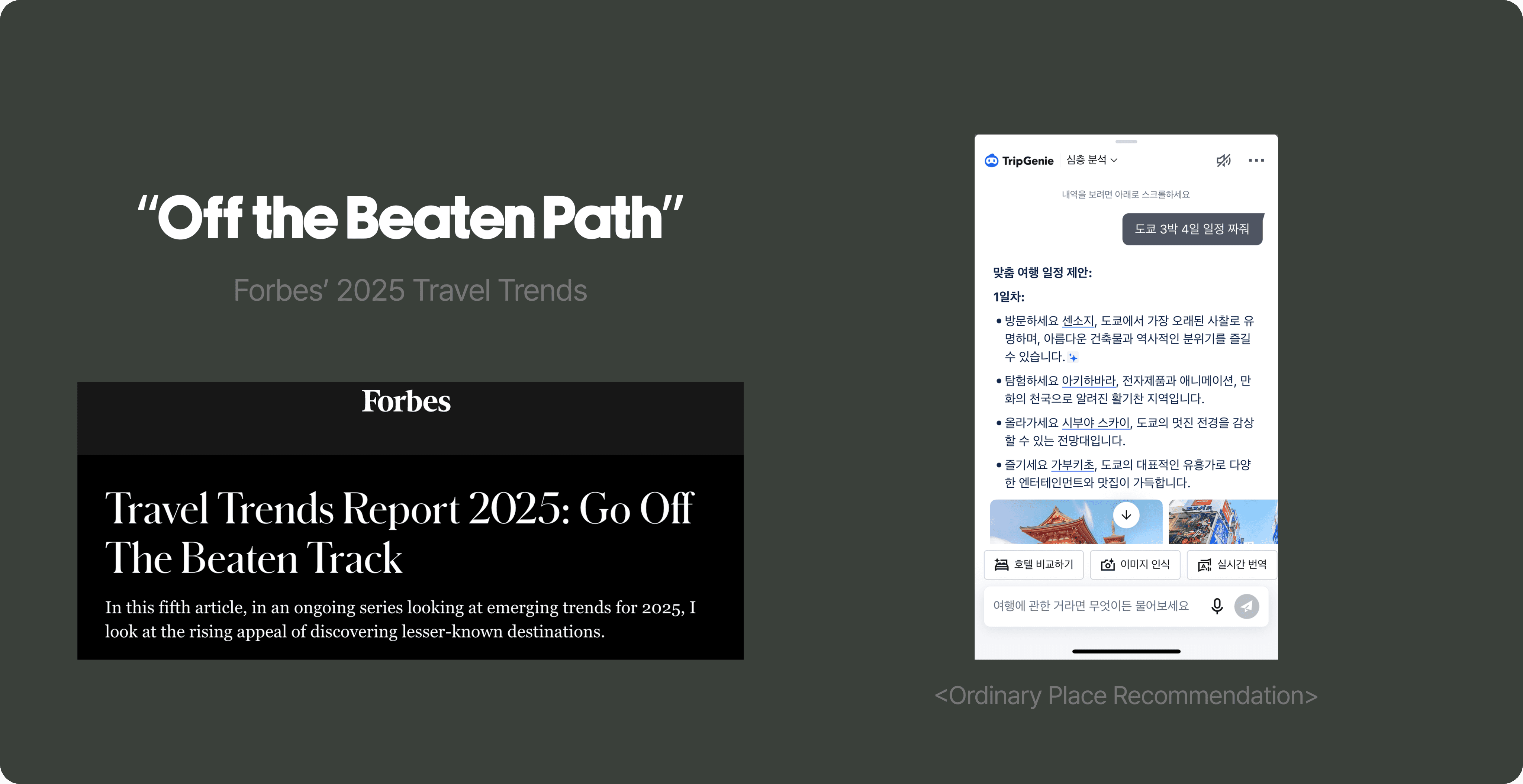
Travel trends emphasize personalization and local experiences.
Yet most AI travel apps still deliver standardized itineraries that fail to reflect individual travel styles.
Travel trends emphasize personalization and local experiences. Yet most AI travel apps still deliver standardized itineraries that fail to reflect individual travel styles.
Travel trends emphasize personalization and local experiences. Yet most AI travel apps still deliver standardized itineraries that fail to reflect individual travel styles.
Problem Hypothesis
Problem Hypothesis
Why AI Travel Apps Fail at Personalization
Why AI Travel Apps Fail at Personalization
We hypothesized that AI travel apps struggle with personalization not because of AI capability,
but because users cannot clearly understand, control, or trust the planning process.
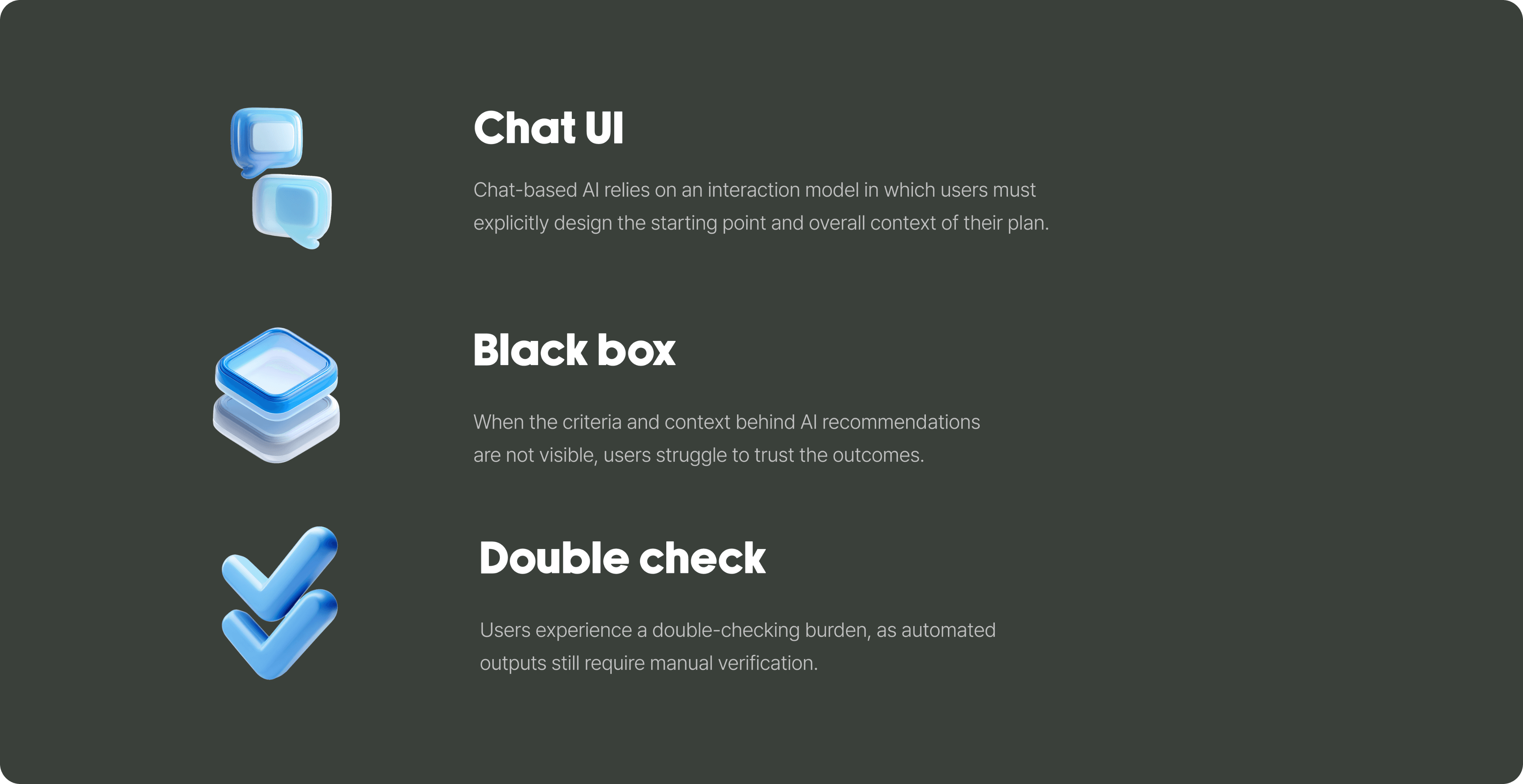
We hypothesized that AI travel apps struggle with personalization not because of AI capability, but because users cannot clearly understand, control, or trust the planning process.
We hypothesized that AI travel apps struggle with personalization not because of AI capability, but because users cannot clearly understand, control, or trust the planning process.
Research
Research
Testing the Hypothesis with Users
Testing the Hypothesis with Users
To understand where personalization breaks down in AI-based travel planning, we examined
how users interact with chat-based AI, interpret recommendations, and validate AI-generated plans.
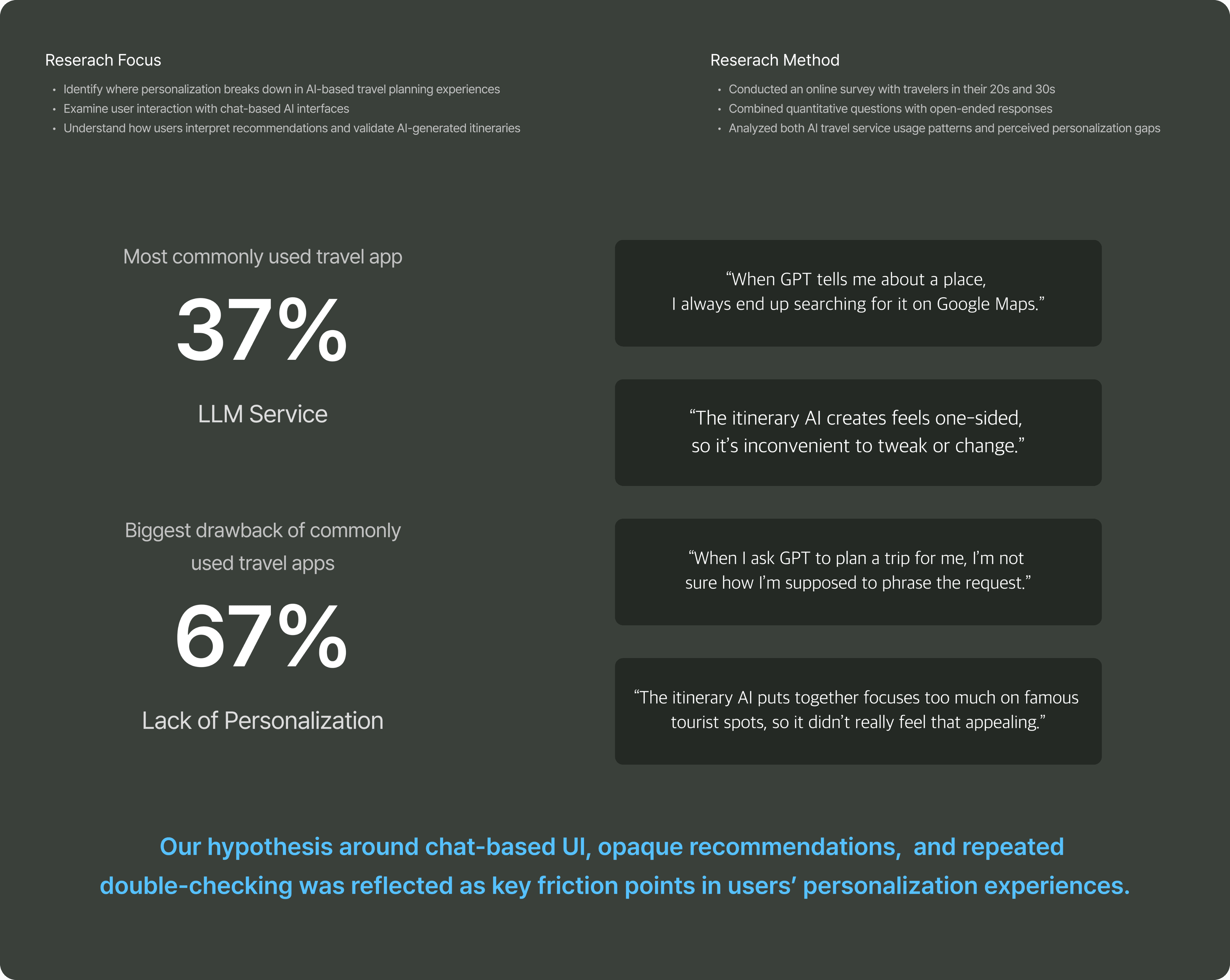
To understand where personalization breaks down in AI-based travel planning, we examined how users interact with chat-based AI, interpret recommendations, and validate AI-generated plans.
To understand where personalization breaks down in AI-based travel planning, we examined how users interact with chat-based AI, interpret recommendations, and validate AI-generated plans.
Design Direction
Design Direction
Designing for Meaningful Personalization
Designing for Meaningful Personalization
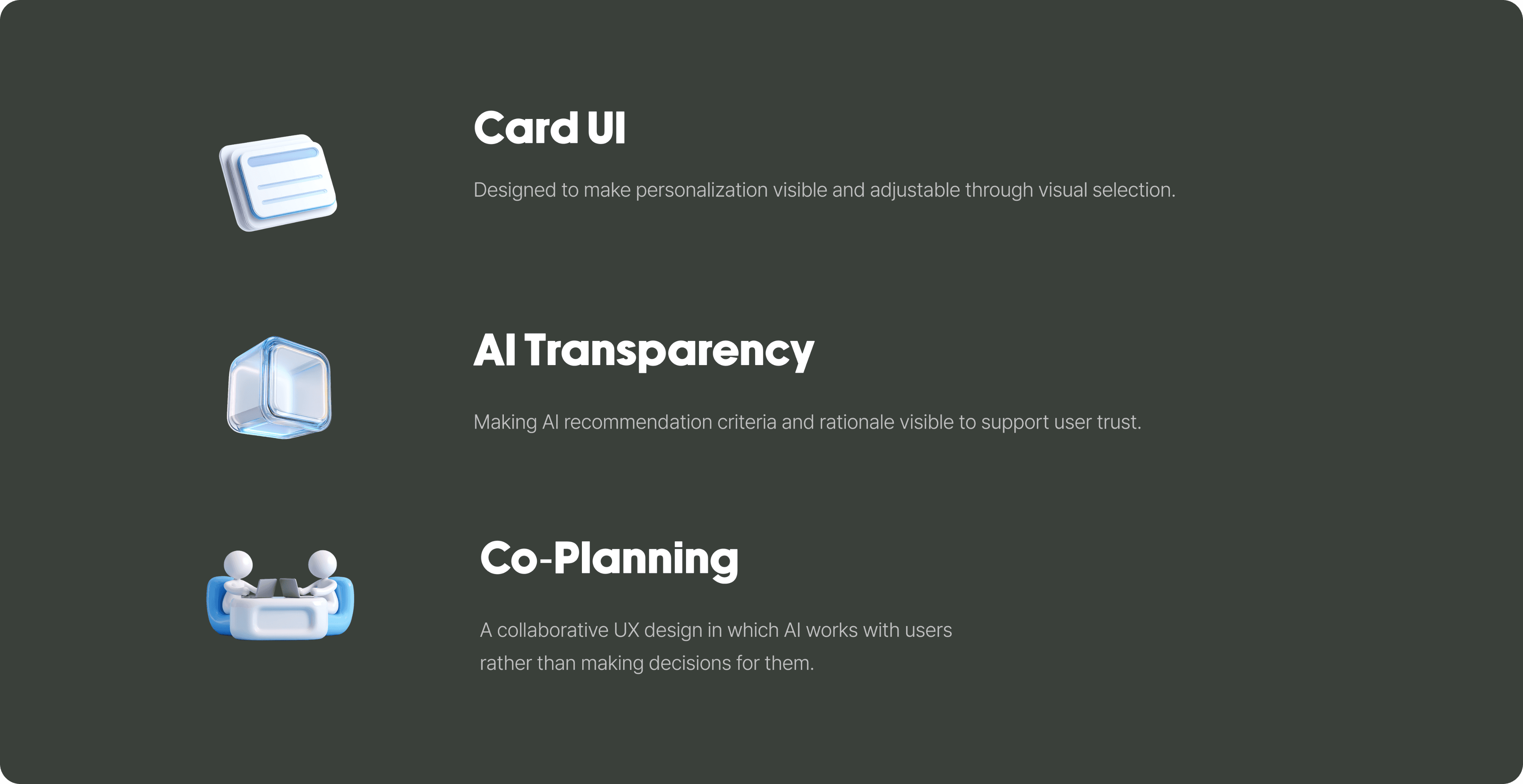
Instead of letting AI decide, we designed personalization as a shared planning process.
Instead of letting AI decide, we designed personalization as a shared planning process.
User Flow
User Flow
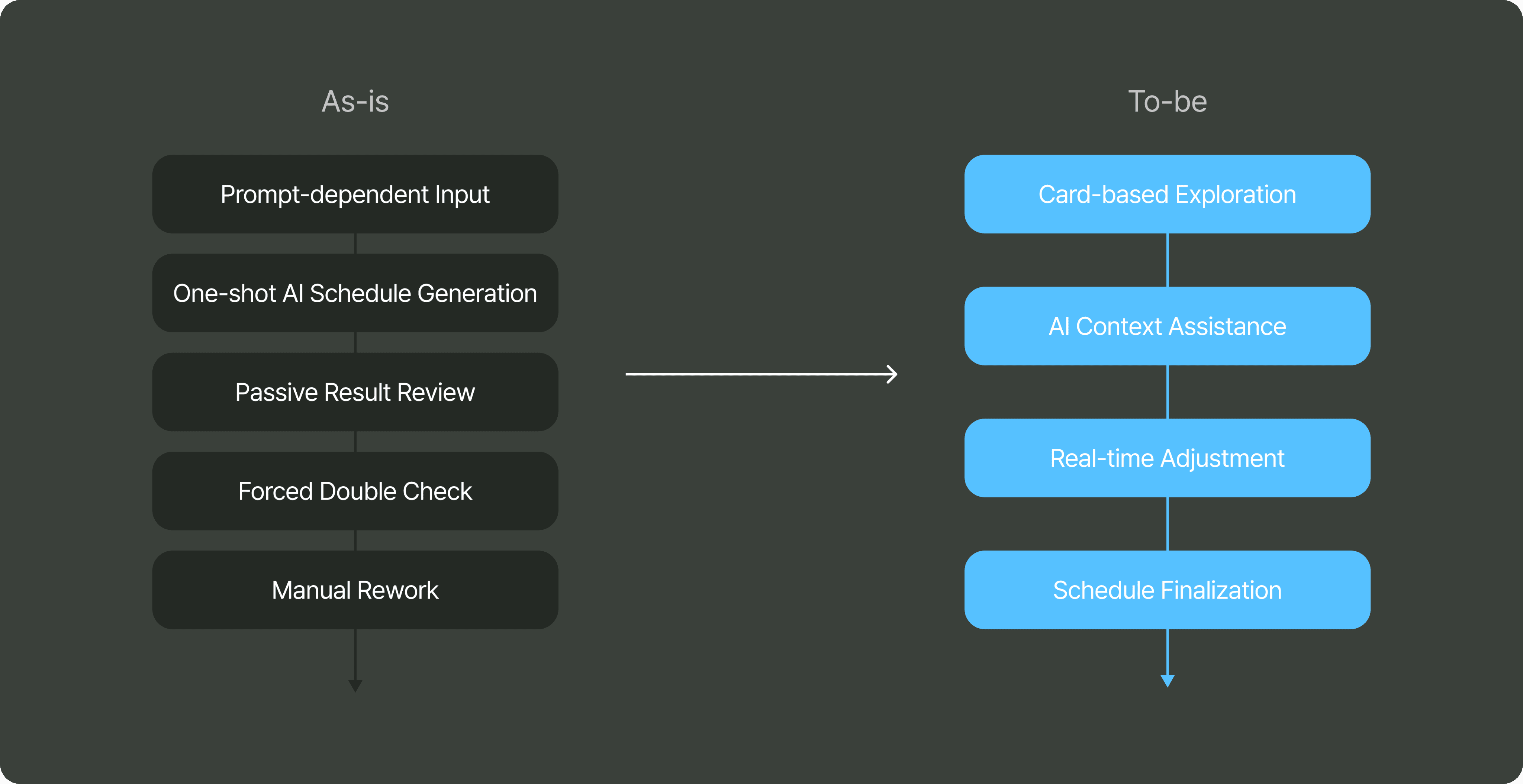
From AI-Driven to User-Led Planning
From AI-Driven to User-Led Planning
The flow moves away from one-shot AI generation toward an interactive, co-planning experience.
The flow moves away from one-shot AI generation toward an interactive, co-planning experience.
Key Interaction #1
Key Interaction #1
Card-based Exploration
Card-based Exploration
Personalization begins with visible choices rather than chat-based prompts.
Users explore travel contexts through cards, making preferences explicit from the start.
Personalization begins with visible choices rather than chat-based prompts. Users explore travel contexts through cards, making preferences explicit from the start.

Key Interaction #2
Key Interaction #2
User-led Selection with AI-assisted Planning
User-led Selection with AI-assisted Planning
Users first collect and select places they want to visit, without AI making upfront decisions.
AI then steps in organize, connet, and adjust the plan, supporting the user's intent rather than replacing it.
Users first collect and select places they want to visit, without AI making upfront decisions. AI then steps in organize, connect, and adjust the plan, supporting the user's intent rather than replacing it.
Users first collect and select places they want to visit, without AI making upfront decisions. AI then steps in organize, connet, and adjust the plan, supporting the user's intent rather than replacing it.

Reflection
Reflection
Designing UI for Working with AI
Designing UI for Working with AI
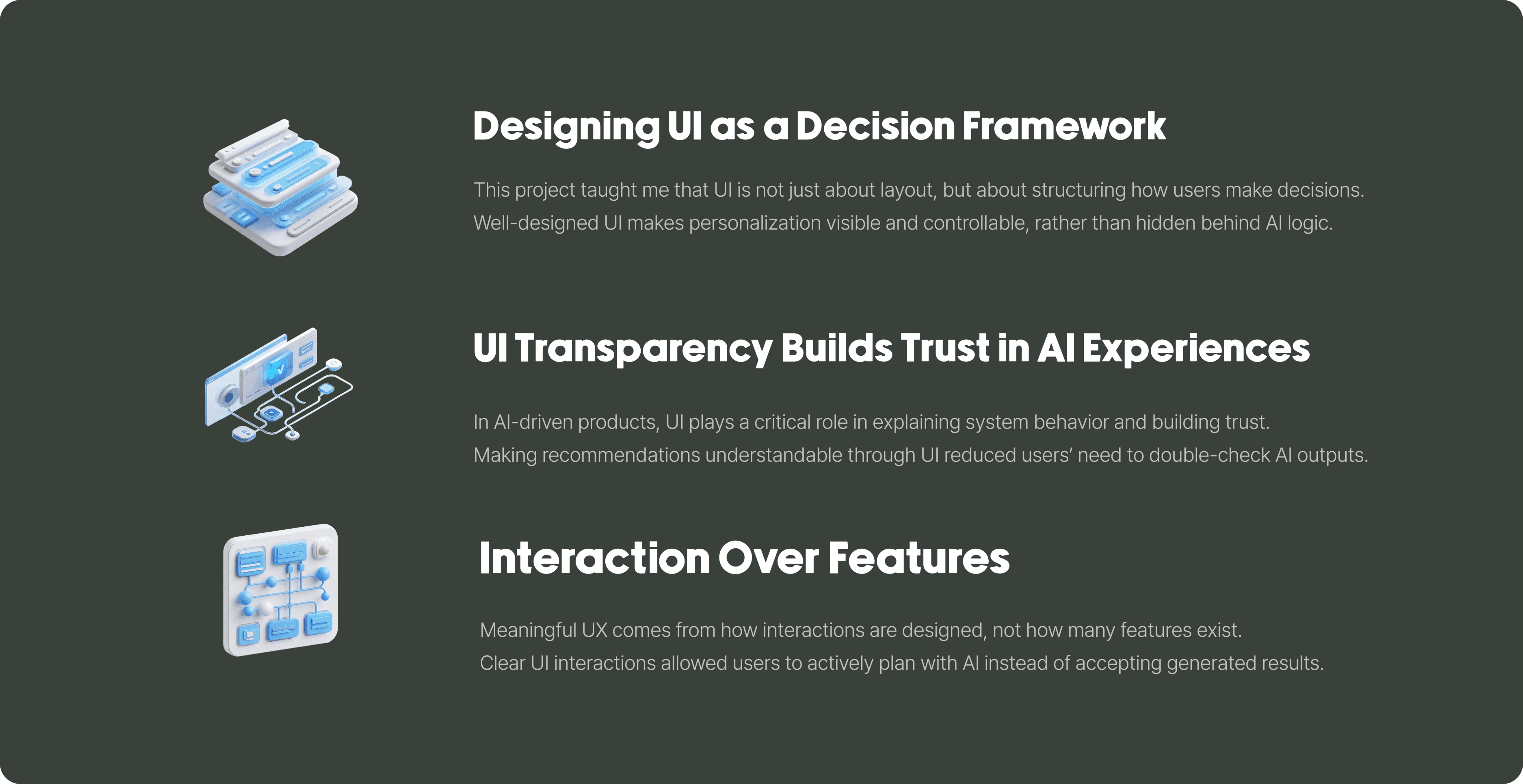
Through this project, I learned that in AI-driven products, UX/UI should not hide automation,
but instead make the process visible so users can understand, decide, and adjust with confidence.
Through this project, I learned that in AI-driven products, UX/UI should not hide automation, but instead make the process visible so users can understand, decide, and adjust with confidence.
Through this project, I learned that in AI-driven products, UX/UI should not hide automation, but instead make the process visible so users can understand, decide, and adjust with confidence.
Get in Touch
Contact me